
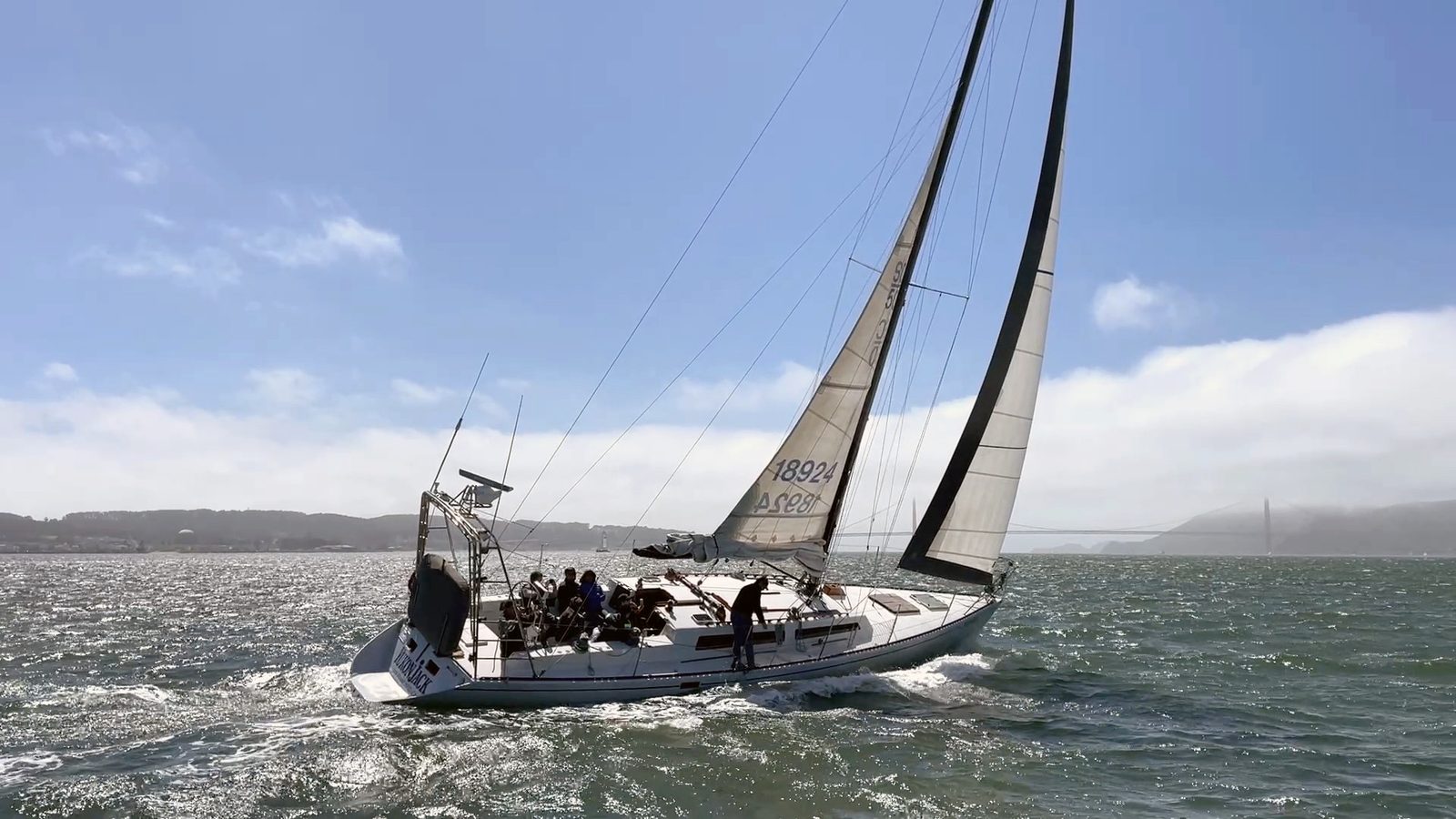
Every charter on San Francisco Bay is shaped by moving water, even when nobody aboard notices it. The tide is the water rising and falling. The current is the water moving sideways, in and out of the Bay. For a sailboat the second one matters far more, and it is worth understanding before you book a trip to the Golden Gate.
Tide and current are not the same thing
The tide is the height of the water. It matters when a boat is tying up at a dock somewhere new, or passing over shallow ground. The current is the horizontal flow the tide sets up as the whole Bay drains and refills. That flow has a direction and a speed, exactly like a boat, and it is what decides how quickly you get where you are going.
Flood, ebb and slack
A flood current runs in from the ocean, filling the Bay. An ebb runs out, emptying it. In between, for a short while, the water barely moves at all. That is slack.
The Bay's tides are mixed: most days bring two high waters and two low waters of different sizes, so the current turns roughly every six hours and no two days line up the same way. That is why a captain checks the current tables before every trip rather than relying on yesterday.
Why the Golden Gate is different
All of the water moving in and out of San Francisco Bay has to pass through one narrow strait. Squeezing that much water through the Gate makes the current there run faster than anywhere else in the Bay, at several knots on an ordinary day and faster on the biggest tides. Out in the wider parts of the Bay the same flow spreads out and slows down.
A sailboat on a conveyor belt
Sailing in a current is like walking on an airport moving walkway. Walk the way it moves and you arrive quickly. Walk against it and you work hard to make slow progress.
Every sailboat has a practical top speed through the water, and for most boats our size that is somewhere between five and eight knots. Sail with a four-knot current and you cover ground far faster than the boat could on its own. Sail against it and the same boat might make two knots over the ground, or, on a big ebb in light wind, very little at all. The boat is working just as hard either way. The water underneath it is simply moving.
When wind and current disagree
On a summer afternoon the westerly blows in through the Gate from the ocean. If the current is ebbing out at the same time, wind and water run straight into each other, and the surface heaps up into short, steep waves. It is a noticeably bumpier ride, most of all near the Gate. When wind and current run the same way, the same breeze produces much flatter water.
If the afternoon breeze itself is new to you, how wind and weather work on San Francisco Bay explains where it comes from and when it arrives.
How it shapes your charter
This is why the time of a trip to the Golden Gate matters, and why your captain may suggest a particular departure time or route. Where the timing allows, the plan is to ride the ebb out toward the Gate and let the flood carry the boat home, rather than fight the water in both directions. On a trip to Alcatraz or along the city front the current matters less, but it still decides which way round the island is quicker.
You do not need to know any of this to enjoy a sail. It is simply why the day is planned the way it is. When you ask about a charter, tell us where you would like to go and we will work out the best time to go there.